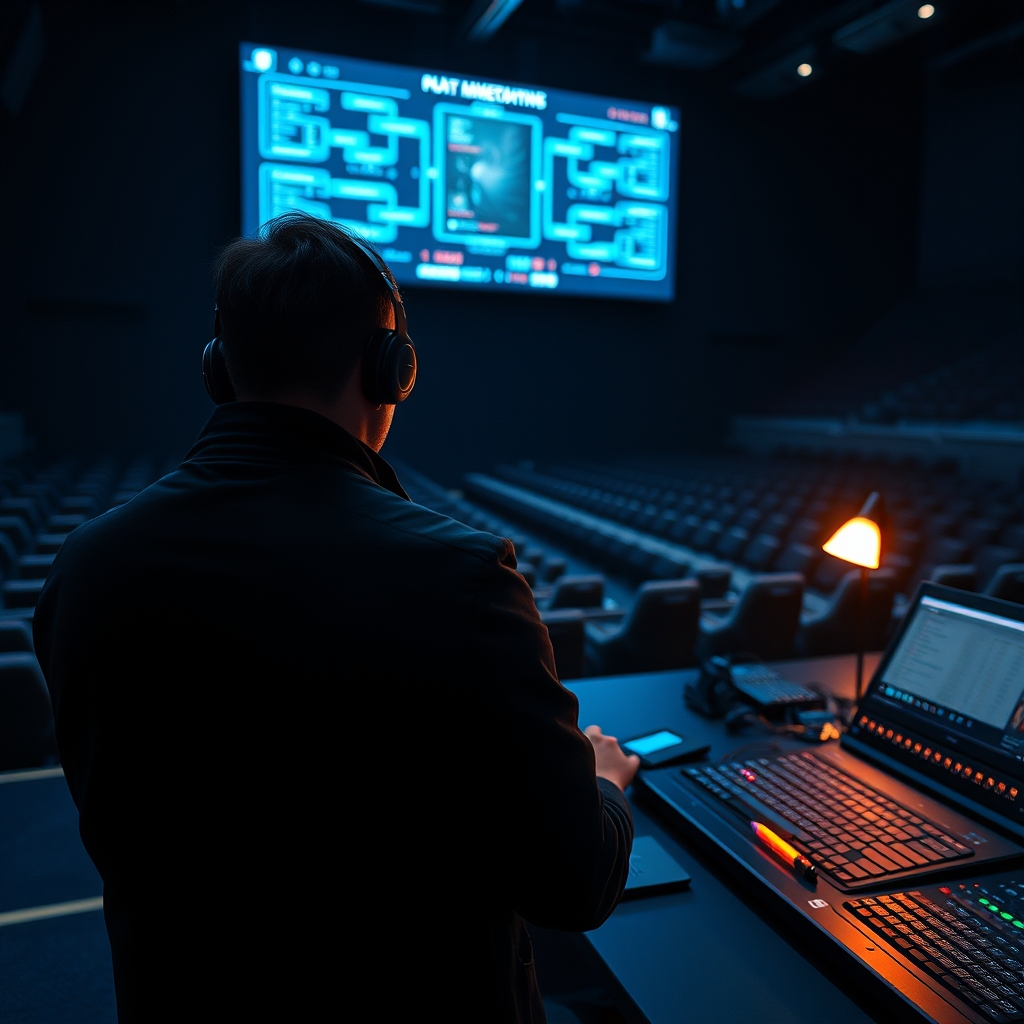
Esports Tournament Management: Turn Your Passion for Competitive Gaming Into a Career
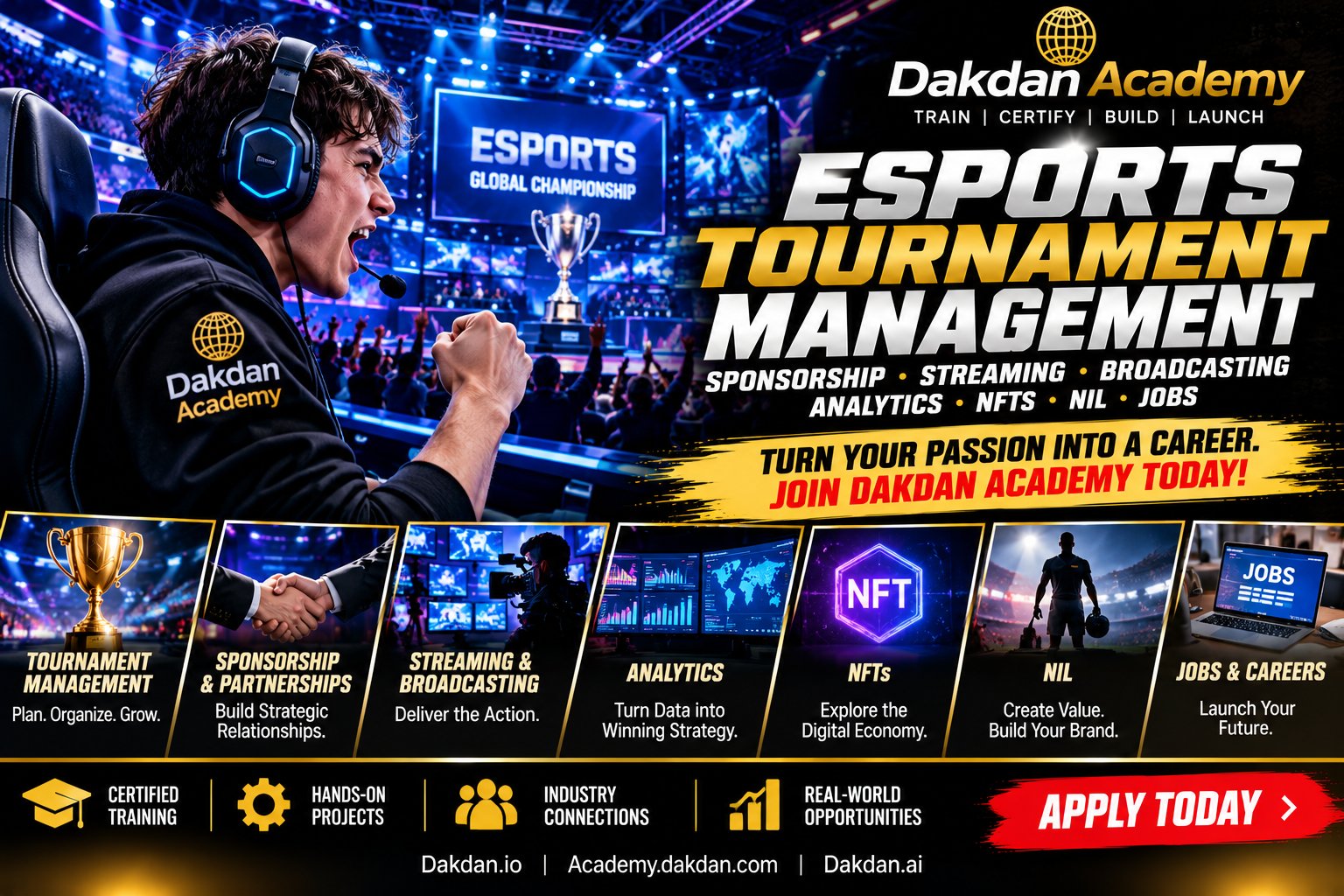
You know the game. You know the meta, the brackets, and the exact second a series flips on one team fight.
What you may not know yet is the job behind that second. Someone scheduled the bracket. Someone confirmed the server, the venue, and the talent. Someone sold the sponsorship, cut the camera, and pulled the stats that explained the comeback. Esports tournament management is that work, and it is a career.
Dakdan Academy trains people for it through its Esports Tournament Management program. Instruction is online, assignments come from live event needs, and a working mentor reviews what you build. Review the program and apply.
The Skills Behind the Stream Are Learnable
The common assumption about esports careers is that you either go pro or you go home. That misses the reality. Large events, regional leagues, collegiate programs, and tournament organizers all run on operations staff: planners, producers, coordinators, and analysts. Central Michigan University’s career guide lists event organizing and team management among the primary professional paths in the field, alongside competing and coaching. Baker College’s breakdown of esports roles names tournament organizers, sponsorship managers, and broadcast and production specialists as distinct positions with real hiring demand.
Those roles reward a specific set of abilities, and none of them require a rank in a game. They require organization, clear communication under pressure, comfort with software, and the discipline to plan for things going wrong. Dakdan Academy’s program covers six of them.
Event Administration: Build the Bracket Before the Big Moment
Every tournament is a logistics problem wearing a jersey. Event administration covers what has to be true before the first match starts:
- Format and ruleset. Single elimination or double, online or LAN, best-of-three or best-of-five. The structure you choose dictates the schedule, the broadcast windows, and the prize pool split.
- Registration and eligibility. Roster verification, age rules, check-in windows, and no-shows. Sloppy entry handling creates re-seeding arguments later.
- Platform readiness. Server configuration, custom lobby settings, communication tooling, and backup plans for connection failures. Online events live or die on the technical setup that nobody on the stream ever sees.
- Venue and vendor logistics. Seating, hardware, power, network bandwidth, food service, and crew call times when the event happens in person.
Learn the sequence and you become the person who keeps a 200-team bracket honest. That reputation travels further than a highlight reel.
Sponsor Coordination: Turn Brand Interest Into Working Deliverables
Sponsorships fund esports, and sponsors judge events on whether their activation actually happened. Sponsor coordination is the discipline of making sure it does.
Start with the inventory. Know exactly what you can offer: overlay placements, segment reads, jersey logos, booth space, content deliverables, hospitality passes. From there, match the offer to the sponsor’s objective. A beverage brand wants sampling and crowd footage. A hardware brand wants product in frame and creator content. A local business wants signage and a mention.
Then document everything. Signed agreements, asset deadlines, approvals, and post-event proof. Sponsors who receive a clean recap of what they paid for renew. Teams that send a vague thank-you email do not.
In the program, you practice building activation plans, tracking deliverables, and writing the recap that keeps a partner on the calendar for the next season.
Streaming and Broadcast Production: Make the Match Watchable
A tournament without a clean broadcast is a private scrim. Broadcast production is where technical skill and storytelling meet.
Learn the layers:
- Capture and encoding. Frame rates, bitrates, resolution choices, and the encoder settings that keep the stream stable on the viewer’s end.
- Observing. Camera control, replay catching, and knowing which fight to show. In a game with simultaneous action, the observer decides what the audience experiences.
- Show control and graphics. Scoreboards, player cams, overlays, transitions, and sponsor graphics firing at the right moment.
- Talent direction. Countdowns, cue times, break lengths, and handoffs between casters and hosts. On-air talent needs structure, not silence.
- Distribution. Platform configuration, simulcast, clips, and the post-event archive that keeps the tournament discoverable.
Build comfort with these and you can step onto a production crew at any level of the ladder. Crews get booked again because they hit cue times, not because they were the loudest voice in the room.
Fan Engagement: Keep the Audience in the Building and on the Platform
Brackets decide champions. Engagement decides whether anyone is still watching when the champion is crowned.
Approach fan engagement as a planning discipline rather than a social media afterthought:
- Map the audience by channel. Discord for community, X and TikTok for clips, YouTube for recaps, and the broadcast itself for live momentum.
- Build a content calendar around the bracket. Announcements, head-to-head previews, player stories, live polls, and a post-final recap. Each has a placeholder before the event starts.
- Script the in-event moments. Prediction prompts, giveaways, crowd segments, and interview windows keep viewers past the midpoint.
- Close the loop. Thank participants, publish results, share clips, and tell the community when the next event runs.
A well-crafted plan turns one tournament into a returning audience. That audience is the asset you will one day bring to a sponsor conversation.
Performance Analytics: Prove What Happened and Coach What Comes Next
Analytics does two jobs in tournament management. It tells the story of the competition, and it improves the next event.
On the storytelling side, learn to compile the numbers viewers and casters need: win rates, head-to-heads, objective control, damage and economy profiles, series swings. Present them cleanly and they become graphics and talking points.
On the operational side, measure the event itself. Peak concurrent viewers, average watch time, chat volume, clip performance, registration-to-participation conversion, and sponsor placement impressions. Compare them event over event. That comparison is what you bring to a planning meeting, and it is what makes your recommendations credible.
Dakdan Academy apprentices practice pulling this data, building reports, and turning analysis into a decision someone can act on.
Online Training With Remote and Local-Market Project Opportunities
The program is built to fit around your life. Coursework is delivered online, so your location does not limit your access to instruction or your mentor.
The applied side is where the program differs from a lecture series. Apprentices work on remote projects and, where available, local-market event opportunities. That means a live bracket, a real sponsor deliverable, or a real broadcast production on your portfolio rather than a hypothetical.
Every apprentice is paired with a practitioner who reviews work, answers questions, and models professional judgment. Instruction supplies the vocabulary. The mentor supplies the context. Assignments are filled in the order applications are reviewed, and seats per track are limited by mentor capacity.
Who Should Apply
Dakdan Academy welcomes career starters, career changers, veterans, and candidates from communities where professional mentorship has been hard to find. You do not need prior industry experience. You need to be willing to learn in public, take feedback, and finish work on schedule.
If you have run a Discord league, managed a team’s scrim schedule, edited a highlight reel, or tracked stats for fun, you already have a starting point. The program turns that instinct into a professional skill set.
Start Your Career on the Operations Side of the Game
Passion gets you interested. Process gets you hired.
Explore the Esports Tournament Management track, review the other Dakdan Academy programs, and submit your interest: https://sportsmedia.net/careers.
Apply early. Mentor capacity is limited, and every seat you wait on is a seat someone else takes.