Choose the Wrong Power System and Watch Your Remote Operations Crumble
Your remote operations face a critical decision that could determine mission success or catastrophic failure. When traditional power grids fail: and they will fail: you need systems that keep running when everything else shuts down.
Military microgrids represent the future of remote operational power, delivering unprecedented resilience, efficiency, and operational flexibility that traditional centralized systems simply cannot match. You're not just choosing between two power sources; you're choosing between vulnerability and independence.
Military Microgrids: Your Shield Against Power Vulnerabilities
Military microgrids operate as self-contained, intelligent power networks that function independently from traditional grid infrastructure. This fundamental independence transforms how you approach remote operations, eliminating single points of failure that plague centralized systems.
Operational Independence That Actually Works
Your microgrid operates completely separate from vulnerable centralized infrastructure. When cyber attacks target the main grid, EMP events disrupt regional power, or physical attacks compromise transmission lines, your operations continue uninterrupted. This isn't theoretical protection: it's proven operational reality.
The decentralized architecture means an attack on one installation remains isolated rather than cascading across multiple facilities. Your mission-critical operations maintain power while traditional grid-dependent facilities go dark.
Slash Your Fuel Logistics by 35 Percent
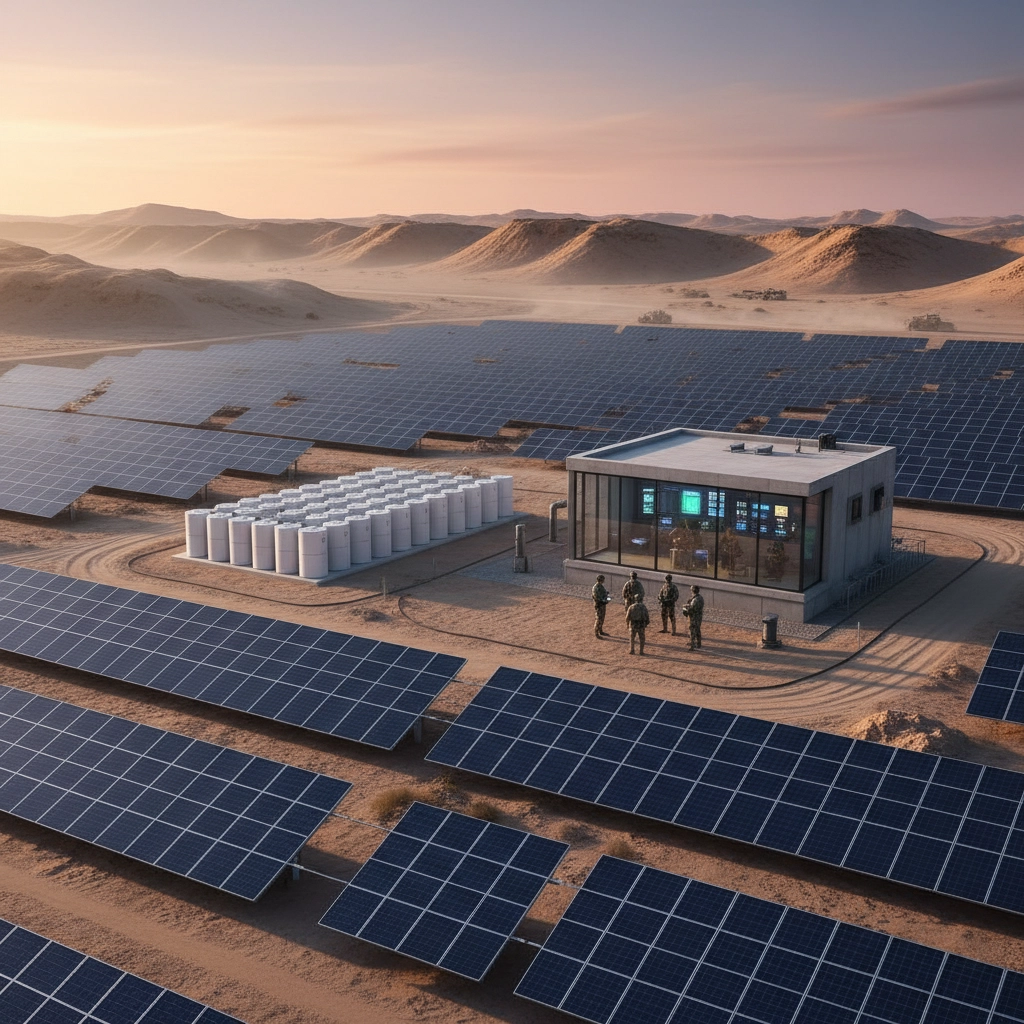
Traditional remote operations demand enormous fuel commitments. The Department of Defense currently transports approximately 50 million gallons of fuel monthly just to power generators across remote locations. Your hybrid microgrid implementation can achieve 35 percent reductions in diesel fuel consumption while eliminating generator maintenance issues like wet stacking.
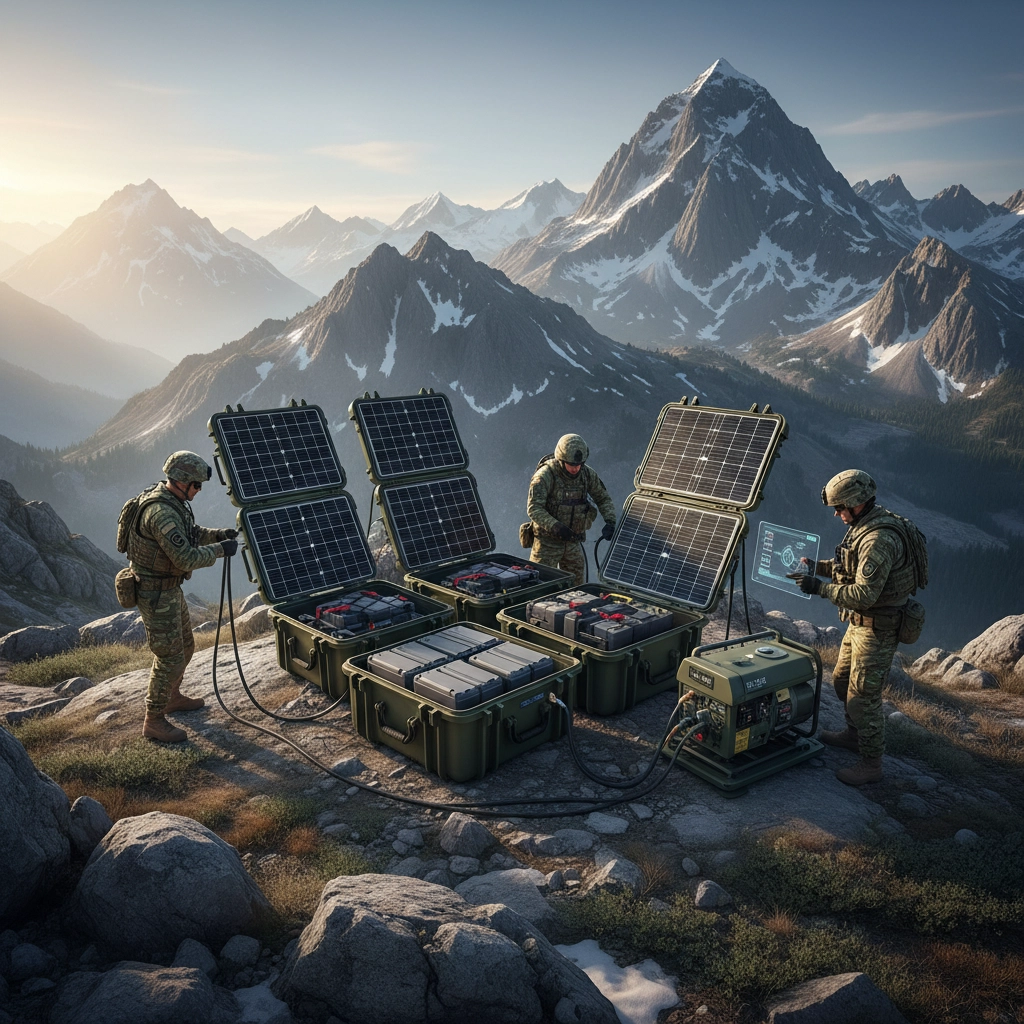
Consider a tactical microgrid with a modest 5 kW solar array and energy storage system. You'll see immediate fuel consumption reductions compared to diesel-only operations, translating directly to reduced logistics vulnerabilities and extended operational reach.
Support Advanced Combat Technologies
Your modern operations require power systems that scale with technological demands. Military microgrids provide the stable, scalable power necessary for autonomous vehicles, directed energy weapons, electric combat vehicles, and multi-domain operational systems.
Advanced microgrids use artificial intelligence to optimize load management, dynamically responding to demand fluctuations while adapting to harsh environmental conditions. Some configurations can operate with zero thermal or acoustic signatures during sensitive operations: providing tactical advantages impossible with traditional systems.
Traditional Power Systems: Built-In Vulnerabilities You Can't Afford
Traditional centralized power systems create operational risks that modern military operations cannot accept. Understanding these limitations helps you recognize why microgrids represent essential infrastructure upgrades.
Centralized Failure Points
Your traditional grid dependency exposes operations to cascading failures beyond your control. Single points of failure in centralized power plants or transmission infrastructure can disable multiple installations simultaneously. Natural disasters, equipment failures, or targeted attacks create widespread outages affecting entire regions.
Logistics Nightmares
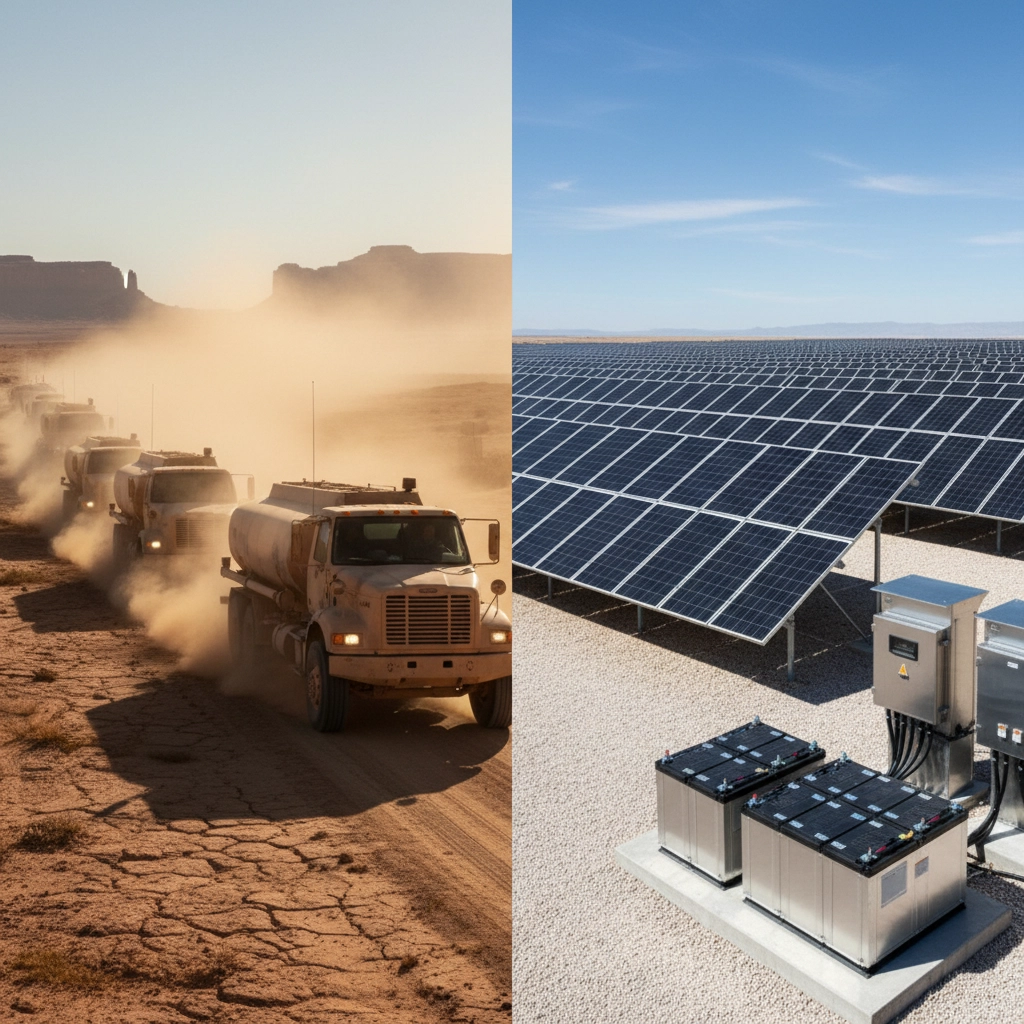
Conventional power systems require continuous fuel supply chains to remote locations, creating extended logistics vulnerabilities. Every fuel convoy represents an exposed supply route, potential ambush target, and operational constraint.
Traditional centralized power plants achieve only 28-32 percent fuel-to-electricity efficiency including transmission losses. You're paying premium costs for suboptimal energy conversion before power even reaches your facilities.
Limited Mission Adaptability
Traditional systems cannot be reconfigured to maximize local renewable resources or adjusted for mission-specific energy requirements. You have no capability for localized backup power or independent operation during grid disruptions.
Direct Performance Comparison: The Numbers Don't Lie
Compare these systems across critical operational dimensions to understand the strategic advantage microgrids provide:
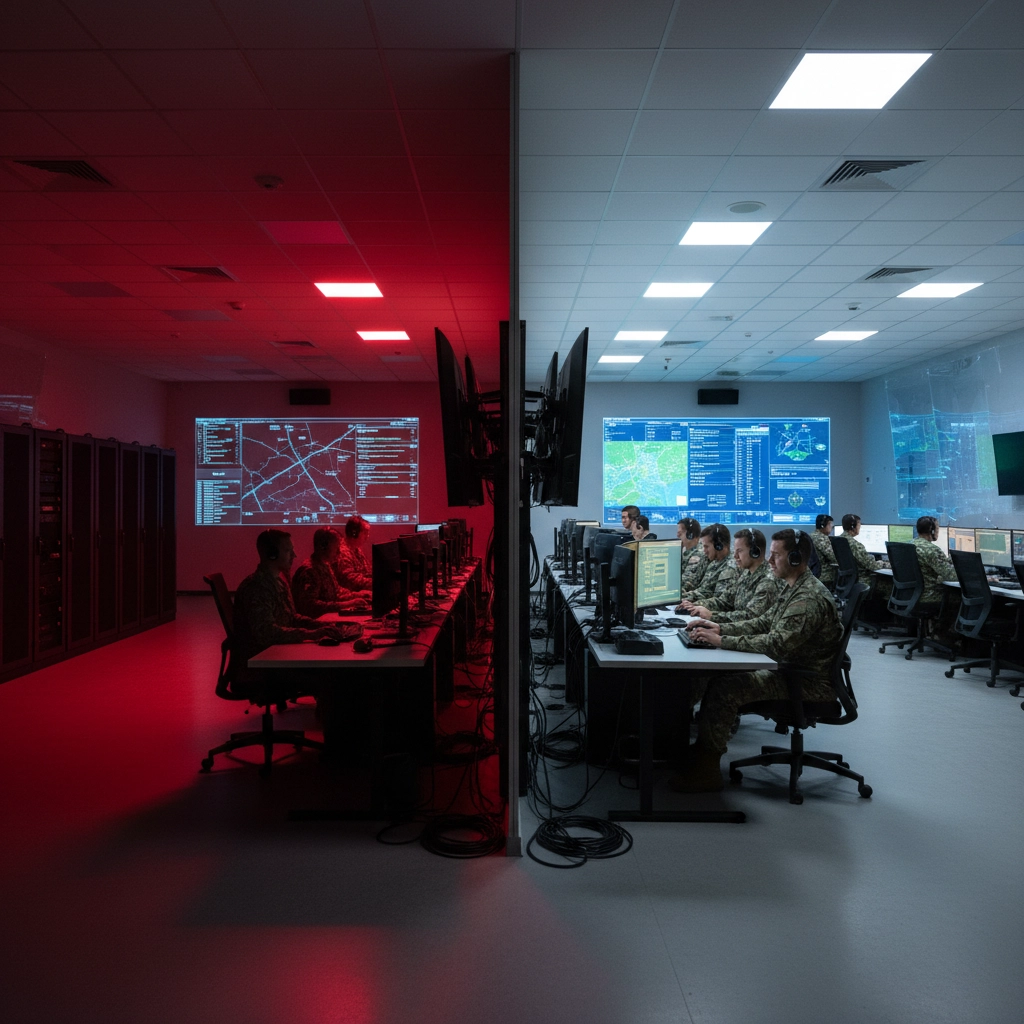
Operational Independence: Military microgrids operate autonomously and remain isolated from grid failures. Traditional systems depend entirely on centralized grid infrastructure and suffer from systemic vulnerabilities.
Fuel Efficiency: Microgrids achieve 35 percent diesel consumption reductions with renewable integration. Traditional systems deliver only 28-32 percent overall efficiency including transmission losses.
Resilience: Microgrids are decoupled from vulnerable infrastructure with isolated impact potential. Traditional systems face systemic vulnerabilities and cascading failure risks.
Long-term Costs: Military installations report $500,000 to $1 million annual savings per microgrid implementation. Traditional systems require continuous fuel costs and exposed logistics operations.
Technology Integration: Microgrids support advanced combat systems with scalable upgrade capabilities. Traditional systems offer limited adaptability to emerging technologies.
Strategic Implementation: Your Path to Power Independence
Transform Permanent Installations
Prioritize hybrid microgrids combining regional renewable resources: solar arrays in desert environments, wind systems on the Great Plains: with battery energy storage and small modular reactors as backup generation. The Army's goal of installing microgrids on every installation by 2035 reflects the strategic necessity of this approach.
Small modular reactors provide clean energy on demand without fossil fuel dependence, allowing you to phase out carbon-producing backup systems while maintaining reliable baseload power.
Upgrade Expeditionary Operations
Implement tactical microgrids using diesel generators enhanced with photovoltaic arrays and energy storage systems. This hybrid approach provides immediate improvements without requiring complete infrastructure overhauls.
Consider hydrotreated vegetable oil (HVO) as a sustainable fuel option that maintains compatibility with existing diesel engines and fuel systems. Modular, mobile microgrid designs enable rapid deployment while preserving compatibility with legacy equipment.
Protect Critical Mission Operations
Installations supporting critical national security missions should prioritize immediate microgrid deployment. More than 40 military bases already operate microgrids with proven capabilities for maintaining operations during natural disasters, cyber attacks, and grid disruptions.
This operational continuity translates directly to mission readiness and force protection. Your ability to maintain operations when traditional grid-dependent facilities fail provides decisive advantages.
Reduce Remote Logistics Exposure
Operations in austere environments benefit most dramatically from microgrid implementation. Reducing fuel transportation requirements from massive monthly shipments to substantially lower quantities through renewable integration represents transformative operational advantage.
Shorter, less frequent supply runs mean reduced convoy exposure, decreased supply line vulnerabilities, and extended operational reach without compromising mission security.
Make the Strategic Choice for Operational Superiority
Military microgrids deliver superior capabilities across every operational dimension that matters: resilience, efficiency, cost management, and mission flexibility. While traditional grids offer lower initial capital requirements, they create unacceptable vulnerabilities and logistics burdens incompatible with modern operational requirements.
Your remote operations demand power systems that enhance rather than constrain mission capability. Microgrids provide the operational independence, fuel efficiency, and technological adaptability necessary for sustained operations in challenging environments.
For any installation requiring power security, tactical flexibility, or long-term cost optimization, microgrids represent the operationally superior choice. The question isn't whether to implement microgrids: it's how quickly you can deploy them to gain strategic advantage over adversaries still dependent on vulnerable traditional systems.
The future of remote military operations runs on independent, resilient power. Your microgrid implementation timeline determines whether you lead that future or get left behind by it.