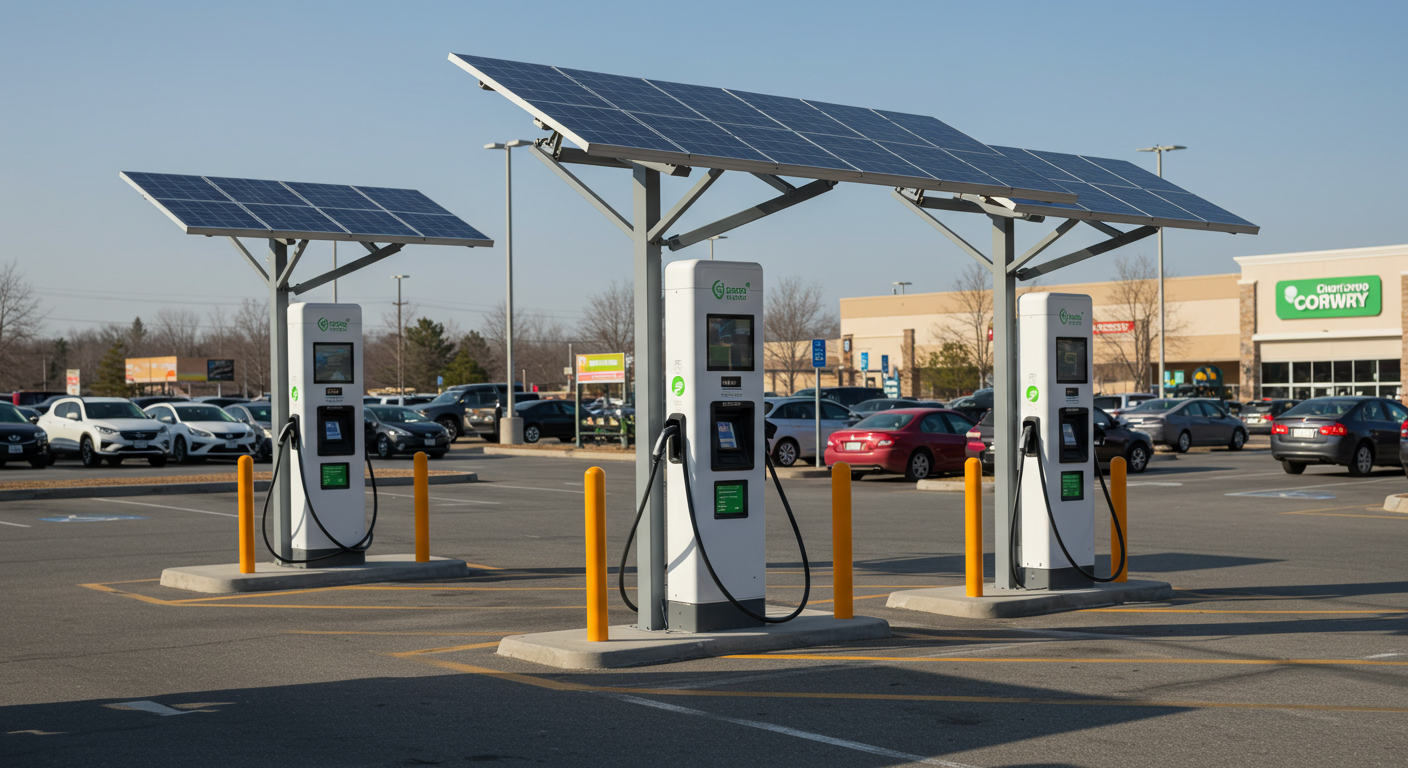
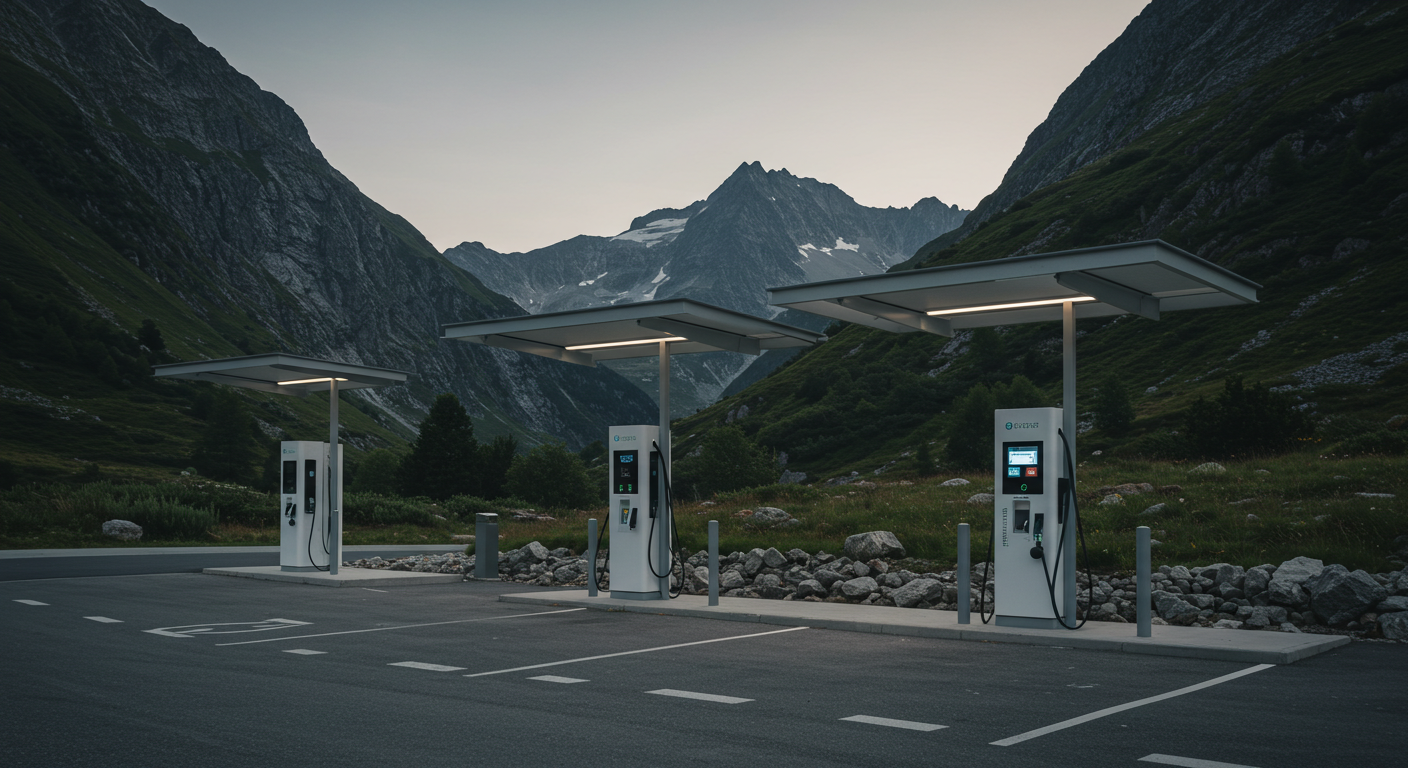
As electric vehicle adoption accelerates across the country, you're likely feeling the pressure to expand charging infrastructure in your municipality. But what happens when your community is located in a remote area, or when extending the electrical grid would cost more than your entire annual budget? Off-grid EV charging stations offer a game-changing solution that lets you bypass traditional infrastructure limitations and serve your residents immediately.
These self-contained power systems harness renewable energy to charge vehicles independently, making them particularly valuable for communities that can't wait years for expensive grid upgrades. You'll discover how to leverage this technology to position your municipality as a forward-thinking leader while solving real infrastructure challenges.
Understanding Off-Grid EV Charging Systems
Before you dive into implementation, you need to grasp exactly what you're working with. An off-grid EV charging station functions as a self-contained power plant that charges electric vehicles without any permanent connection to the utility grid.
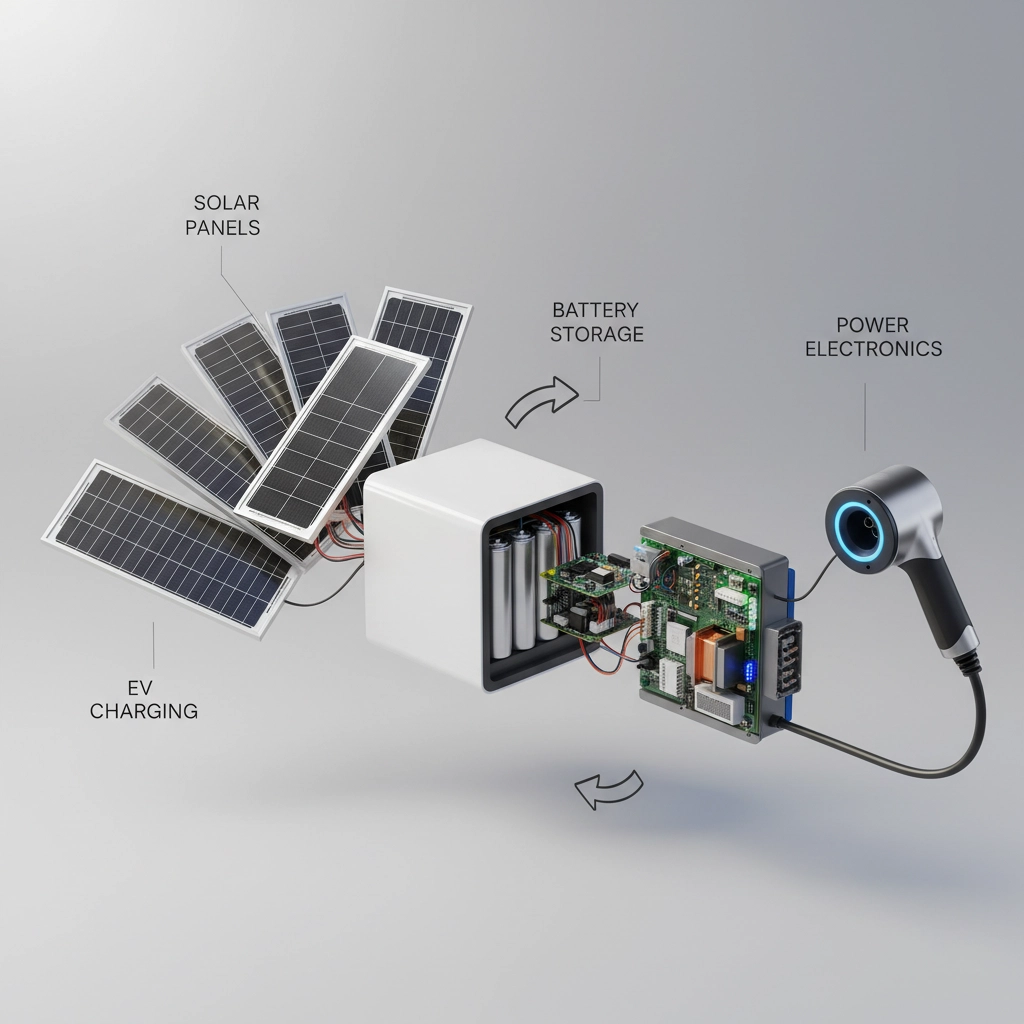
Your system operates through four essential components working in harmony. Solar panels capture renewable energy throughout the day, while a charge controller conditions that power for optimal battery storage. Battery energy storage systems hold electricity for later use during cloudy periods and nighttime hours, and an inverter converts the stored DC power to AC current that most EV chargers require.
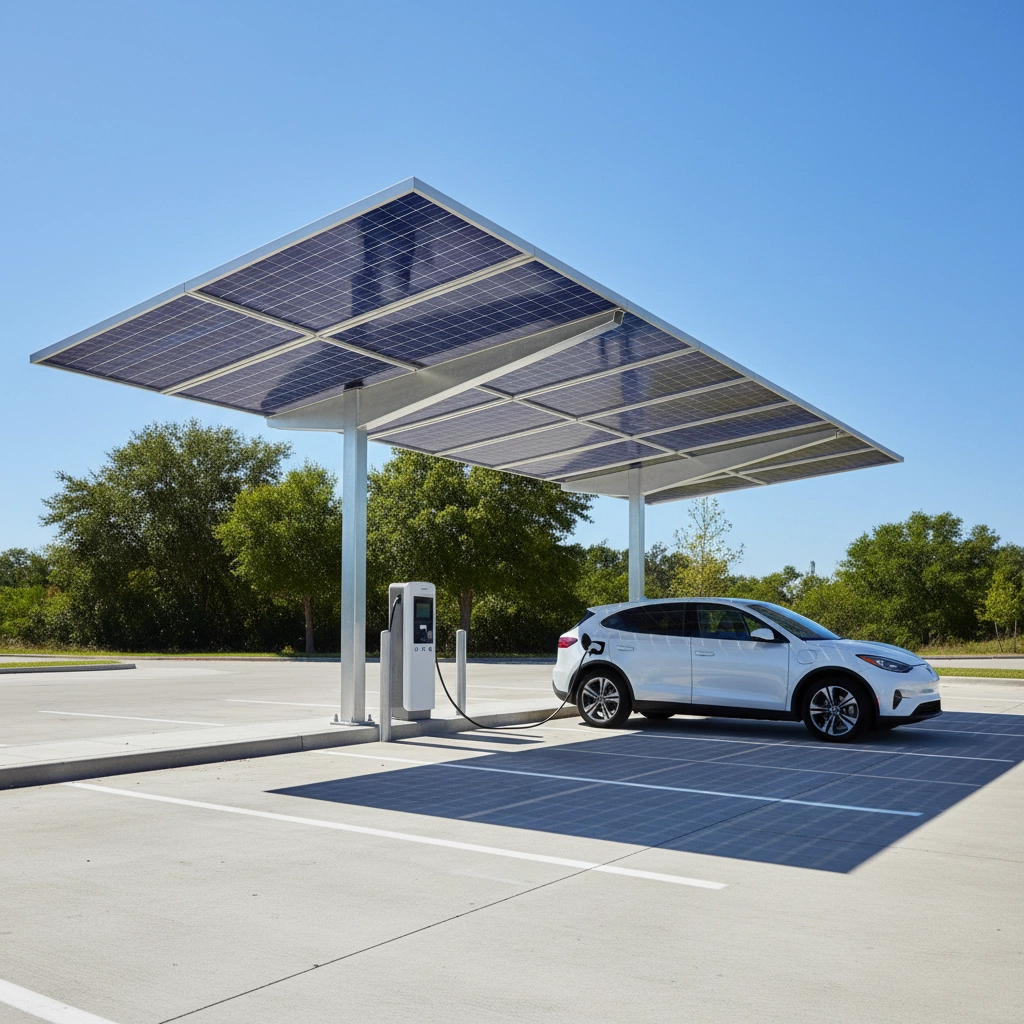
This independence from utility supply means you eliminate interconnection delays, complex permitting processes, and ongoing demand charges. You're essentially creating your own micro-utility that serves your specific community needs without waiting for external infrastructure development.
Strategic Advantages You'll Gain
Your decision to pursue off-grid charging infrastructure delivers multiple strategic benefits that extend far beyond simple vehicle charging. You'll close infrastructure gaps at significantly lower total costs compared to extending grid infrastructure to remote locations.
The economics work in your favor thanks to falling costs of solar modules, advanced lithium-ion battery storage systems, and modular power electronics. These deployments have become economically viable at scales ranging from 5 kW installations serving a few vehicles to multi-megawatt systems supporting entire fleets.
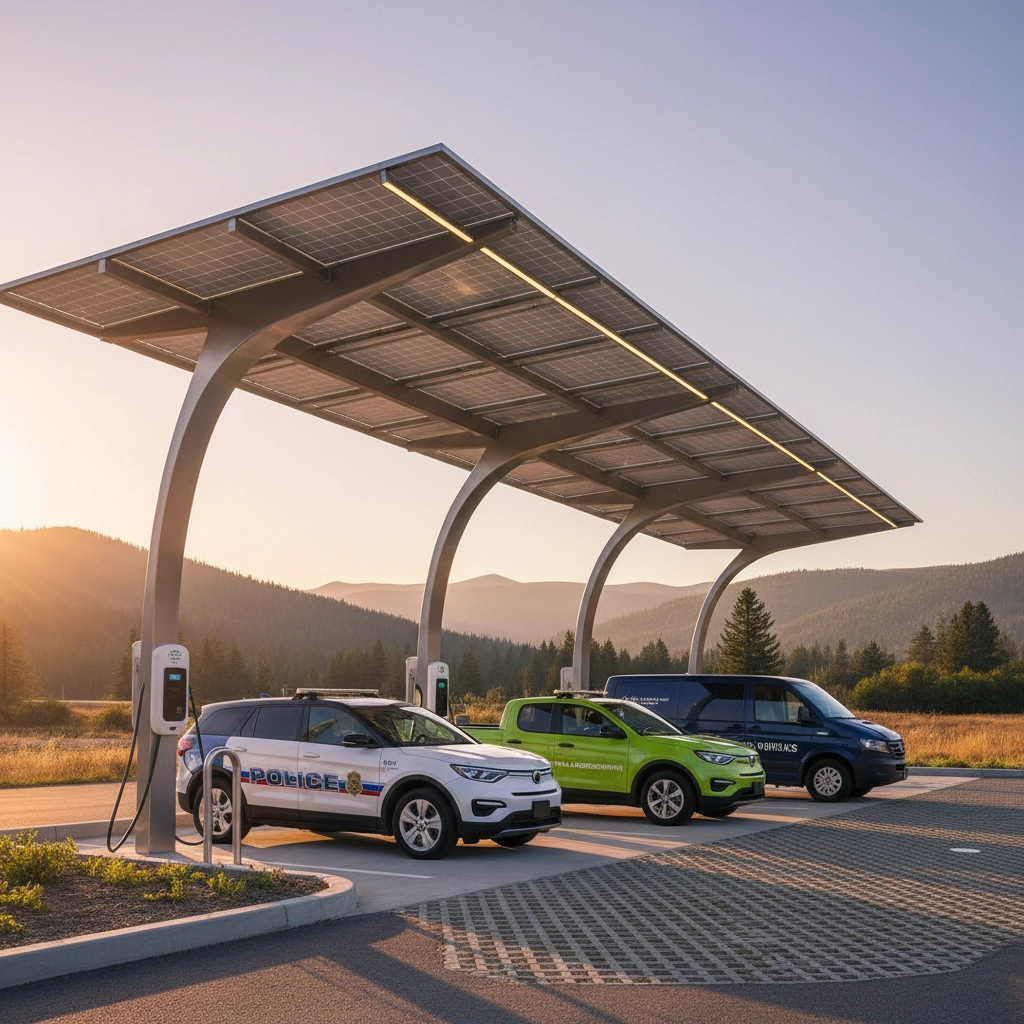
Energy resilience becomes a critical asset when you decouple from utility outages. Your charging stations guarantee vehicle readiness during blackouts, ensuring emergency services, public works vehicles, and other critical municipal fleets remain operational when your community needs them most.
You'll also accelerate your deployment timeline dramatically. Off-grid stations eliminate environmental disruption: no trenching, extensive permitting, construction delays, or utility hookups required. This means you can have operational charging infrastructure in weeks rather than months or years.
Conducting Your Needs Assessment
Your success starts with understanding exactly what your community requires. Begin by surveying local residents through online surveys, community meetings, and public consultations to gauge EV interest and identify preferred charging locations.
Analyze your traffic patterns and parking data to pinpoint high-traffic areas where charging stations provide maximum benefit. Look for locations where people naturally spend extended periods: municipal buildings, libraries, community centers, and popular recreational areas.
Review your existing charging infrastructure to identify gaps and expansion opportunities. Map out where current charging options fall short of demand, and prioritize locations that would serve the greatest number of residents.
Assess your current electrical grid capacity throughout your municipality. Identify locations where grid extension would be prohibitively expensive or time-consuming. These become prime candidates for off-grid solutions that deliver immediate results.
Strategic Planning and Design
Transform your assessment data into clear strategic direction. Define specific objectives such as emission reduction targets, EV adoption promotion rates, or support for local business districts. These goals will guide every subsequent decision you make.
Determine the optimal mix of charger types your community needs. Level 1 chargers work for overnight parking situations, Level 2 chargers serve most daily charging needs, and DC Fast Chargers accommodate travelers and rapid turnaround requirements.
Select your locations strategically, focusing on public parking lots, municipal buildings, parks, transit hubs, and other high-accessibility areas. Ensure all selected sites comply with accessibility standards to serve residents with disabilities effectively.
Consider your long-term expansion plans from the beginning. Design your initial installations with modular components that allow easy scaling as demand grows. This approach prevents costly retrofitting and ensures your investment adapts to changing needs.

System Components and Architecture
Your off-grid charging system requires high-quality components that work reliably in your specific environmental conditions. Photovoltaic arrays should feature high-efficiency solar panels with module conversion efficiency exceeding 26% to maximize energy capture from available sunlight.
Battery energy storage systems represent your most critical component investment. Advanced lithium-ion batteries, including repurposed second-life EV battery packs, provide the storage capacity needed for consistent charging availability during cloudy periods and nighttime hours.
Power electronics: robust controllers and inverters: manage power flow, voltage conversion, and system optimization. These components ensure your system operates efficiently across varying weather conditions and charging demands.
Smart charging hardware with user-friendly interfaces and real-time connectivity enables remote monitoring and control. Integration with AI-driven energy-management software reduces operational complexity while improving system efficiency.
Budgeting and Funding Strategies
Develop a comprehensive budget that accounts for equipment costs, installation expenses, site preparation, and ongoing maintenance. Your total investment typically ranges from $50,000 for basic installations to $200,000+ for high-capacity systems with multiple charging ports.
Explore diverse funding options that can significantly reduce your net costs. Government grants at federal, state, and local levels often provide substantial support for renewable energy and EV infrastructure projects. State and federal rebates, tax incentives, and green bonds offer additional financial advantages.
Consider public-private partnerships that share deployment costs and risks while providing ongoing maintenance support. These arrangements can accelerate implementation while reducing your municipality's financial burden.
Factor in long-term savings from avoided utility demand charges, reduced grid infrastructure costs, and potential revenue generation from charging fees. Many municipalities find that off-grid systems provide positive returns within 5-7 years.
Launch and Community Engagement
Your launch strategy determines how quickly residents adopt your new charging infrastructure. Host an official launch event with local media, community leaders, and residents to showcase your investment in sustainable transportation.
Consider offering free charging during the first month to encourage initial usage and demonstrate system reliability. This approach builds confidence among early adopters while generating positive word-of-mouth marketing.
Publicize your initiative through local media, social media platforms, and municipal websites. Create clear instructional materials explaining how to use the charging equipment, including step-by-step guides and troubleshooting information.
Provide clear, weather-resistant signage at each charging station with QR codes linking to online resources. Include information about charging costs, operating hours, and contact details for technical support.
Ongoing Operations and Maintenance
Establish a regular maintenance schedule with routine inspections and preventive servicing to ensure consistent reliability. Your maintenance team should monitor solar panel cleanliness, battery health, and charging port functionality on a monthly basis.
Deploy monitoring software that tracks usage patterns, system performance, and energy production. This data helps you optimize operations, identify maintenance needs before failures occur, and plan future expansions based on actual demand.
Implement rapid repair protocols to minimize downtime when issues arise. Maintain relationships with qualified technicians who understand your specific equipment and can respond quickly to service calls.
Use your collected data to make informed adjustments to charging rates, operating hours, and expansion priorities. Regular analysis of usage patterns reveals optimization opportunities that improve both user satisfaction and system efficiency.
Your off-grid EV charging infrastructure represents more than just a municipal service: it's a statement about your community's commitment to sustainable transportation and innovative problem-solving. By thoughtfully planning, strategically implementing, and actively maintaining these systems, you'll provide reliable, clean transportation support that serves your residents while positioning your municipality as a leader in the clean energy transition.